

Introduction: Money Is More Psychological Than Mathematical
Most people think wealth is built with complex formulas, secret investment strategies, or high-paying careers. But the truth is simpler—and more uncomfortable.
Money is not just math. It’s behavior.
Two people can earn the same salary, live in the same city, and face the same economy—yet one builds wealth while the other struggles financially for decades. Why?
Because wealth is less about intelligence and more about psychology.
In this in-depth guide, we’ll explore:
- Why some people stay poor even with good income
- Why others become rich with average salaries
- How emotions drive financial decisions
- The hidden beliefs that shape your money life
- Proven mindset shifts that build long-term wealth
This article combines timeless wisdom from thinkers like Morgan Housel (author of The Psychology of Money) and behavioral research insights from Daniel Kahneman to explain how money really works.
If you want to understand why people stay poor—or become rich—this is your complete guide.
1. Your Money Story Begins in Childhood

Before you earned your first rupee or dollar, you already had beliefs about money.
Your Financial Blueprint Is Formed Early
Your childhood experiences shape your money behavior:
- If you grew up with scarcity → You may fear spending
- If you grew up with abundance → You may underestimate risk
- If your family argued about money → You may avoid financial discussions
- If money was used as power → You may link money with control
These early experiences create what psychologists call a money script—a subconscious narrative about what money means.
And most adults never question it.
Example:
- Person A grew up in financial insecurity. They hoard cash but avoid investing.
- Person B grew up wealthy. They take calculated risks confidently.
Same income. Different results.
Wealth is built not just on income—but on internal beliefs.
2. Income Does Not Equal Wealth
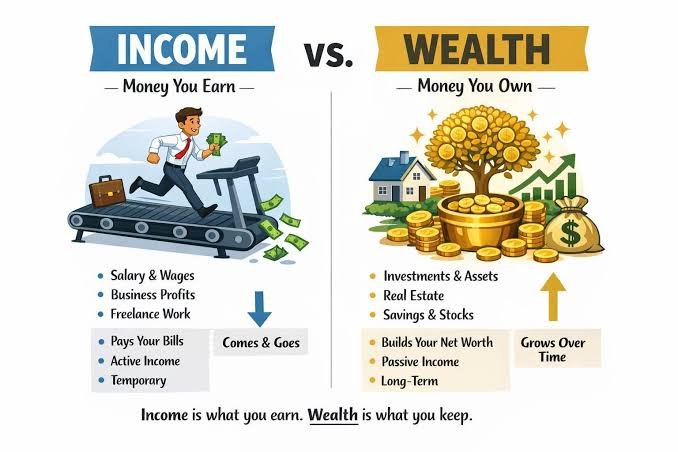
One of the biggest psychological traps is confusing income with wealth.
Income = What You Earn
Wealth = What You Keep
Many high earners stay poor because:
- Lifestyle expands with income
- Spending increases with status
- Saving feels unnecessary
Meanwhile, many moderate earners build real wealth because:
- They live below their means
- They invest consistently
- They avoid lifestyle inflation
True wealth is invisible.
The expensive car, designer clothes, and luxury lifestyle? Often financed.
Real wealth is:
- Low debt
- High savings rate
- Long-term investments
- Financial flexibility
The psychology difference?
Delayed gratification.
3. The Power of Delayed Gratification

One famous experiment that explains wealth psychology is the Stanford marshmallow experiment.
Children were given a choice:
- 1 marshmallow now
- 2 marshmallows later
Those who waited tended to perform better later in life.
Wealth works the same way.
Poor Financial Psychology:
- Spend today
- Borrow for pleasure
- Avoid thinking about the future
Wealthy Financial Psychology:
- Invest today
- Delay luxury
- Think long-term
The ability to delay gratification separates consumers from investors.
4. Instant Pleasure vs Long-Term Security
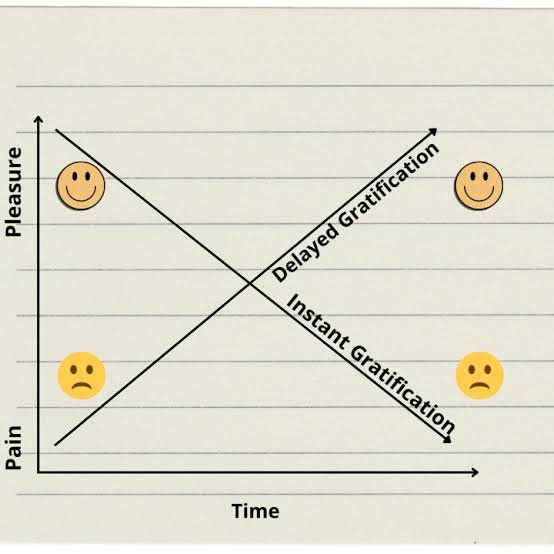
Modern society is built to trigger impulsive spending:
- One-click shopping
- Buy-now-pay-later
- Credit cards
- Social media comparison
These systems are designed to override rational thinking.
Behavioral economist Daniel Kahneman explains that humans have two thinking systems:
- System 1: Fast, emotional, impulsive
- System 2: Slow, rational, calculated
Most financial mistakes happen in System 1.
Wealthy individuals train themselves to pause and activate System 2 before making financial decisions.
5. Fear: The Hidden Wealth Destroyer

Fear keeps many people financially stuck.
Common Financial Fears:
- Fear of investing
- Fear of losing money
- Fear of looking foolish
- Fear of failure
- Fear of economic collapse
Ironically, avoiding risk is often the biggest risk.
Not investing due to fear can cost decades of compound growth.
The Psychology Shift:
Poor mindset:
“What if I lose money?”
Wealth mindset:
“What if I lose time?”
Time is the most powerful wealth-building asset.
6. The Role of Compounding (And Why Most Ignore It)

Albert Einstein allegedly called compound interest the 8th wonder of the world.
Compounding is simple:
Money earns returns.
Returns earn returns.
Growth accelerates over time.
But here’s the psychological challenge:
Compounding is boring at first.
Year 1 → small growth
Year 5 → noticeable growth
Year 20 → exponential growth
Many people quit too early because they expect fast results.
Wealthy people understand patience.
They trust the process.
7. Lifestyle Inflation: The Silent Wealth Killer

As income increases, spending increases.
This is called lifestyle inflation.
New job → new car
Salary hike → bigger house
Bonus → luxury vacation
The result?
You earn more—but stay financially stuck.
Psychologically, humans adapt quickly to upgrades.
What once felt luxurious soon feels normal.
Wealthy individuals resist lifestyle inflation and increase investments instead.
8. Social Comparison and Financial Pressure

Social media has intensified financial comparison.
You see:
- Vacations
- New cars
- Designer brands
- Crypto gains
- Business success
But you don’t see:
- Debt
- EMI stress
- Loans
- Financial anxiety
Comparison triggers spending to “keep up.”
But wealth grows in silence.
One of the most powerful financial habits is ignoring comparison.
9. Scarcity Mindset vs Abundance Mindset
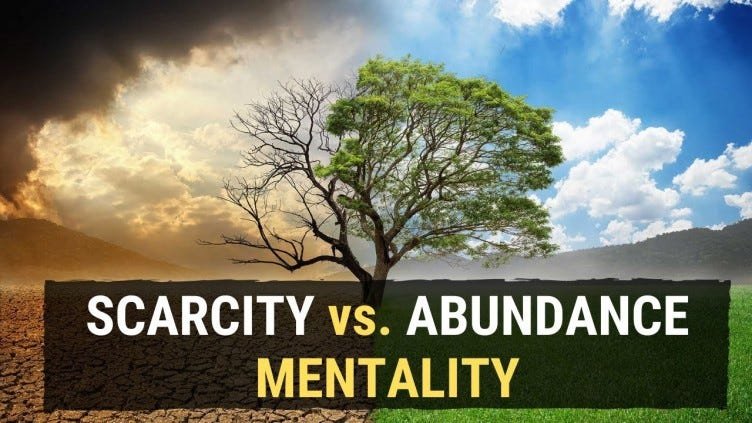
Your mindset determines your financial ceiling.
Scarcity Mindset:
- “Money is hard to earn.”
- “Rich people are greedy.”
- “I’ll never be wealthy.”
- “Investing is risky.”
Abundance Mindset:
- “Skills increase income.”
- “Wealth is created.”
- “Money flows to value.”
- “Investing is ownership.”
Scarcity leads to fear-based decisions.
Abundance leads to opportunity-based decisions.
10. Risk Tolerance and Financial Growth

Becoming wealthy requires taking calculated risks.
But most people:
- Overestimate short-term risk
- Underestimate long-term risk
For example:
Short-term risk → Stock market volatility
Long-term risk → Inflation destroying savings
Psychologically, volatility feels scary.
Inflation feels invisible.
Wealth builders focus on long-term probability—not short-term noise.
11. Emotional Spending: The Comfort Trap

Many people use spending as therapy.
Stress → shopping
Sadness → eating out
Boredom → online purchases
Money becomes emotional regulation.
But emotional spending creates financial stress—which increases emotional spending.
A vicious cycle.
Wealthy individuals separate emotions from financial decisions.
They automate savings to remove emotional interference.
12. The Power of Habits Over Intelligence
You don’t need high IQ to build wealth.
You need:
- Consistency
- Discipline
- Patience
- Emotional control
Many financially successful people are not financial geniuses.
They simply:
- Invest regularly
- Avoid debt traps
- Stay consistent
Wealth is built by boring habits—not brilliant moves.
13. Luck vs Skill: A Balanced Perspective

Luck plays a role in wealth.
But so does survival.
For every visible success story, many invisible failures exist.
The key psychological trait?
Humility.
Wealthy individuals understand:
- Markets can change
- Businesses can fail
- Conditions shift
So they diversify and avoid arrogance.
14. Debt Psychology: Tool or Trap?
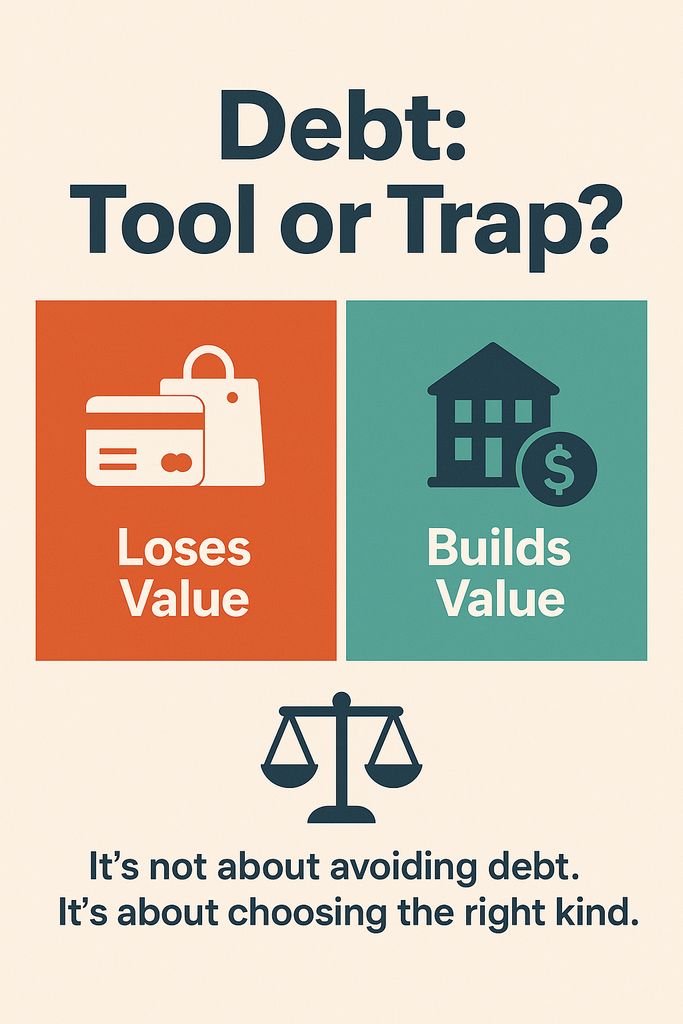
Debt can either build wealth or destroy it.
Destructive Debt:
- Credit card debt
- Lifestyle loans
- Impulse purchases
Productive Debt:
- Business investment
- Real estate leverage
- Education that increases income
The difference is psychological intent.
Are you borrowing to impress—or to build?
15. Financial Identity: Who Do You Believe You Are?

Your identity shapes your actions.
If you believe:
“I’m bad with money.”
You’ll behave that way.
If you believe:
“I am a disciplined investor.”
Your actions align with that belief.
Changing financial identity changes financial behavior.
16. Patience Is the Ultimate Wealth Skill

In a world of instant gratification, patience is rare.
But wealth requires:
- 10+ years
- Market cycles
- Economic downturns
- Emotional control
People stay poor because they want fast money.
People become rich because they accept slow growth.
17. Environment Shapes Financial Success
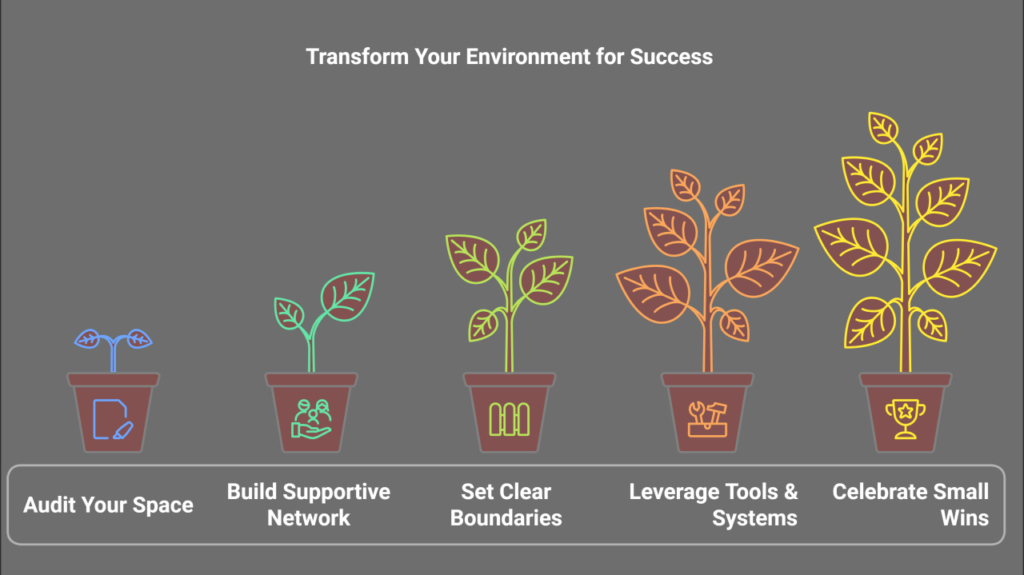
Your circle influences your financial habits.
If your environment values:
- Consumption → You spend more
- Investing → You invest more
- Complaining → You stagnate
- Growth → You grow
Choose environments that normalize wealth-building behavior.
18. The Role of Financial Education
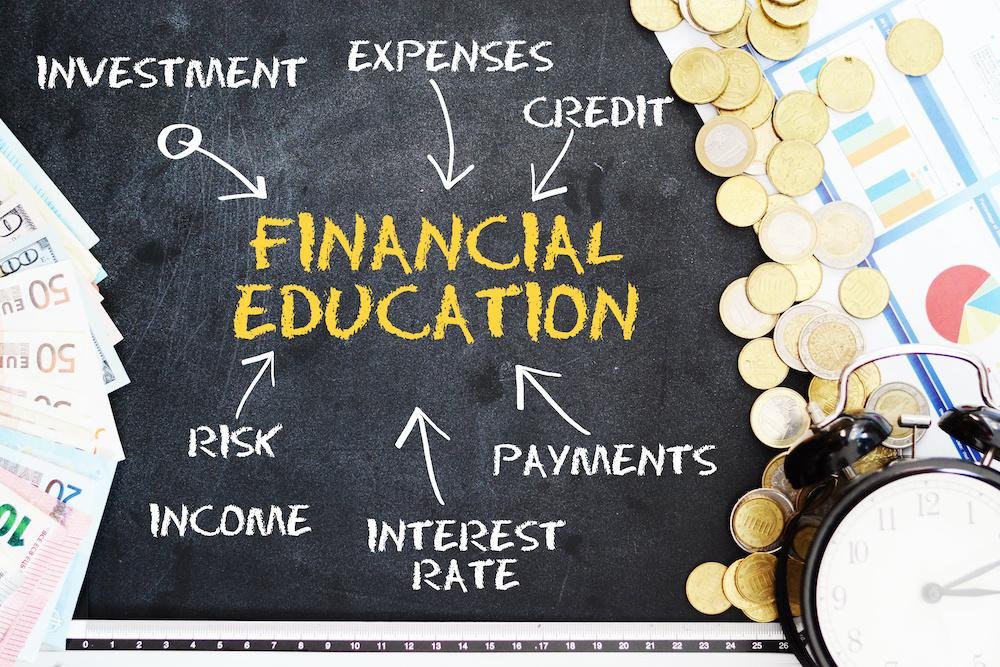
Most schools don’t teach:
- Investing
- Taxes
- Asset allocation
- Risk management
So people rely on:
- Social media advice
- Friends
- Emotional decisions
Financial literacy reduces emotional mistakes.
But mindset still matters more than knowledge.
19. Long-Term Thinking: The Wealth Multiplier

Most people think in months.
Wealthy people think in decades.
Short-term thinking leads to:
- Frequent trading
- Panic selling
- Impulsive purchases
Long-term thinking leads to:
- Compounding
- Strategic investing
- Financial peace
Time horizon determines financial outcome.
20. Why Some People Stay Poor
It’s rarely because of laziness alone.
Common psychological patterns include:
- Fear of risk
- Instant gratification
- Poor financial habits
- Emotional spending
- Negative money beliefs
- Lack of long-term vision
- Lifestyle inflation
- Social comparison
Money problems are often behavior problems.
21. Why Some People Become Rich

Common psychological traits include:
- Patience
- Delayed gratification
- Risk tolerance
- Emotional control
- Long-term thinking
- Habit consistency
- Low ego
- Financial identity awareness
Wealth is not magic.
It’s psychology applied consistently.
22. Practical Steps to Improve Your Money Psychology
Here’s how to shift your financial future:
1. Audit Your Money Beliefs
Write down what you believe about money.
2. Automate Investments
Remove emotion from saving.
3. Increase Your Time Horizon
Think in decades, not months.
4. Avoid Comparison
Silence financial noise.
5. Increase Income Skills
Skill-building reduces scarcity thinking.
6. Embrace Boring Wealth
Slow growth beats fast collapse.
Final Thoughts: Wealth Is Behavioral
The difference between staying poor and becoming rich is not just income.
It’s:
- Psychology
- Habits
- Identity
- Patience
- Emotional discipline
Money amplifies who you already are.
Change your mindset—and your financial life follows.
As Morgan Housel wisely explains in The Psychology of Money, wealth is built on behavior, not brilliance.
If you master your money psychology, you master your financial destiny.
Frequently Asked Questions (FAQ)
Q1: Is money mindset really that important?
Yes. Behavior determines long-term financial outcomes more than income alone.
Q2: Can someone with low income become rich?
Yes—through high savings rates, investing, skill growth, and long-term thinking.
Q3: Why do lottery winners often go broke?
Because sudden wealth doesn’t change financial psychology.
Q4: What is the biggest psychological mistake with money?
Short-term thinking and emotional spending.
Key Takeaway
Becoming rich is less about what you earn…
and more about how you think.
Master your psychology.
And wealth will follow.
Discover more from GrowWealth365
Subscribe to get the latest posts sent to your email.